How to choose the perfect style of artwork for your home decor ?

Are you looking to decorate your walls but unsure which piece of artwork to choose ? Do you dream of a piece that catches the eye and becomes the focal point of the room ? Or would you simply like to add a more personal touch to your home ?


In this practical guide, discover the criteria for striking the right balance between the wall’s dimensions, the artwork’s placement and the atmosphere you’re aiming for. We’ll also see how a custom portrait based on a photo can help you design a space that truly reflects your personality.

SUMMARY ▲

    Which artwork should you choose based on your interior design style ?

    Interior design style Recommended type of artwork Desired effect
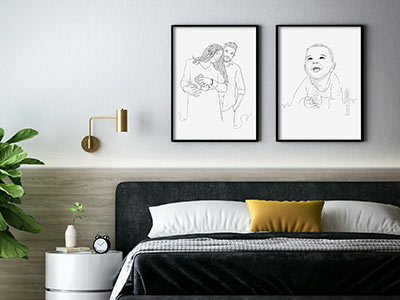
    Modern interior Modern minimalist interior decoration artwork

    A minimalist or Line Art print

    Clean lines, an airy composition and neutral colours to preserve the sobriety of a contemporary living room. A Line Art or Minimalist print featuring few details and modern shades is highly recommended.
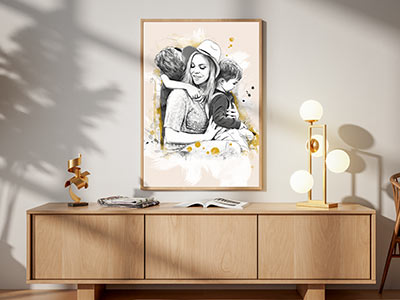
    Scandinavian decor Sketch wall art for a Scandinavian interior

    A sketch or portrait in soft tones

    A decorative print with a delicate finish, natural shades and light graphics. Cream wood, bright tones, and fine line work : a portrait sketch or landscape illustration will create a luminous and cosy atmosphere.
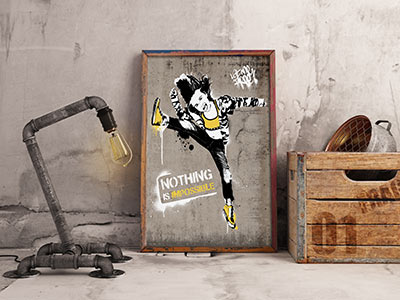
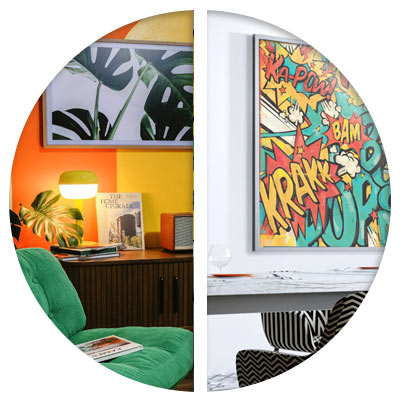
    Industrial style Custom Street Art portrait in an industrial interior

    A graphic artwork

    Character and contrasts! A bold, graphic artwork such as Street Art will pair perfectly with raw materials, metal and wood elements characteristic of an industrial style decor.
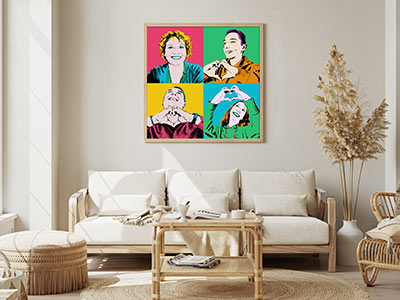
    Bohemian or pop Colourful Pop Art portrait in a styled lounge

    A colourful or artistic piece of wall art

    A vibrant, confident touch that immediately catches the eye, thanks to a custom Pop Art portrait. An artistic and expressive dimension will also look stunning alongside a painting-effect canvas.

    How do you match the colours of the wall art to your decor ?

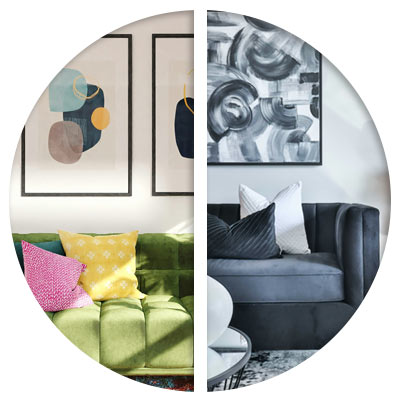
    Playing with colours largely determines the effect produced by a wall painting. Before you start, it’s therefore important to take a good look at your interior decor.

    Incorporate colours already present in the room

    The aim is to achieve colour harmony between the walls, the sofa and the other elements in the room. The decorative artwork can incorporate a primary or secondary colour already present to create a visual connection.


    > Examples : if your living room already features blue or green, incorporating one of these shades into the artwork creates visual continuity. Conversely, in a room with grey tones, a black-and-white portrait enhances the graphic feel.


    > If you can’t replicate the exact same colours, a few hints of similar shades will suffice.

    Tip for choosing decorative wall art: incorporate colors from the room
    A decorative wall art should create a contrast.

    Play with contrasts to show off your artwork

    It’s generally advisable to create contrast to give a space character. The aim is to find the right balance between your decor and the artwork.


> Examples : in a room with white walls and neutral tones, a colourful painting placed above a piece of furniture will naturally catch the eye. Conversely, a piece with soft colours will bring calm to an interior already overloaded with patterns and colours.

    > There are no absolute aesthetic rules; a painting can certainly blend into the decor !

    What size artwork should you choose to suit your wall and furniture ?

    The key here is to consider both the proportions of the artwork to the wall and the overall style.

    Adapt the artwork’s dimensions to the available space

    A wall hanging contributes to the visual balance of a room. An unsuitable size may therefore appear out of proportion to the remaining space.


    > Examples : A large wall art above the sofa to fill the empty space, a medium-sized canvas placed on a kitchen sideboard, or a compact piece to adorn a bedside table.

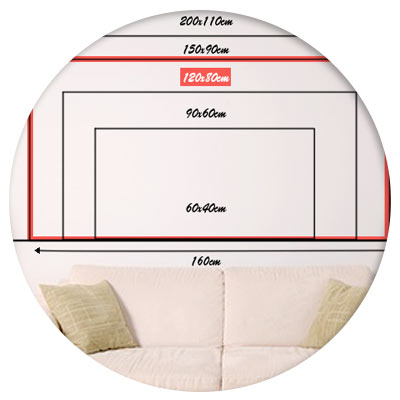
    > A general, though not absolute, rule : choose a wall art width that is roughly two-thirds that of the piece of furniture beneath it. For a sofa 240 cm long, a painting approximately 160 cm wide will create visual balance.

    choosing a size for a wall art that suits the available space
    TIP : test before drilling

    If you’re unsure where to hang the wall art, simulate the effect by taping sheets of paper together. Then attach this template to your wall using repositionable adhesive tape.


    You can also take a photo of the wall and overlay an image of the picture using an online editing tool such as Canva.

    Choosing a suitable format for decorative wall art

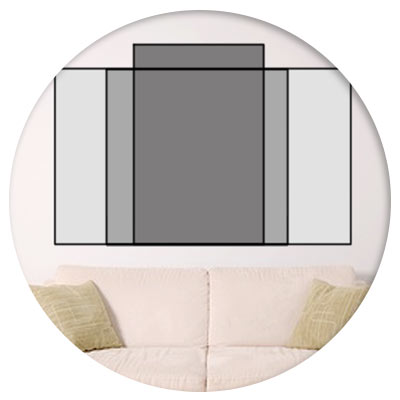
    Choosing between portrait, landscape or square formats

    Depending on the layout of the room and the available space, certain orientations may be more suitable than others.

    > Layout examples : a landscape or panoramic format above a long piece of furniture, a portrait format on a narrow wall or near a staircase, or a square format for a balanced composition. 

    > To help you choose, compare the three orientations on a photo of your room’s wall.

    Where should you hang your artwork to enhance your decor ?

    In the living room : create a focal point above the sofa

    The wall above the sofa is a classic spot for a piece of art. But be careful not to leave a space that is out of proportion with the furniture. The artwork should be neither too low nor too high : the important thing is to be able to view it comfortably.

    > If you’re creating a display with several wall art pieces, lay them out on the floor first to check the balance of the arrangement.

    In the bedroom : opt for a personal and soothing atmosphere

    Choosing the right style of artwork for a bedroom deserves special attention, as this room is, above all, a place to recharge. The idea is to combine the psychology of colour, using soft shades (sage green, powder pink, beige, etc.), with soothing visual themes. Opt, for example, for a landscape photo or an image that evokes memories of travel. A portrait of a couple or family also has its place in this intimate space.


    > Leave a gap of 15 to 20 cm between the headboard and the bottom of the frame to give the whole arrangement some breathing space.

    In the dining room or hallway : adding character to the room

    The dining room is the heart of your home, whilst the hallway is the first space visitors pass through when entering your home. These two areas should therefore not be overlooked !


    A colourful decorative painting placed above a sideboard will add a touch of vibrancy. In an entrance hall or along a staircase, opt for a long, narrow format or a composition of several pictures.


    > To create a harmonious ‘picture wall’, maintain a common thread between the pieces : a recurring colour, a shared theme or complementary formats.

    Why choose a personalised portrait to decorate your home ?

    Transform a family photo, a couple’s photo or a pet photo into a decorative piece

    A photo that is dear to you can become a key feature of your interior decor. But taking that snapshot and infusing it with an artistic interpretation will add real value, whilst retaining its personal touch.


    A custom portrait thus allows you to create a piece of decor that reflects your personality and showcases an image that means a great deal to you.

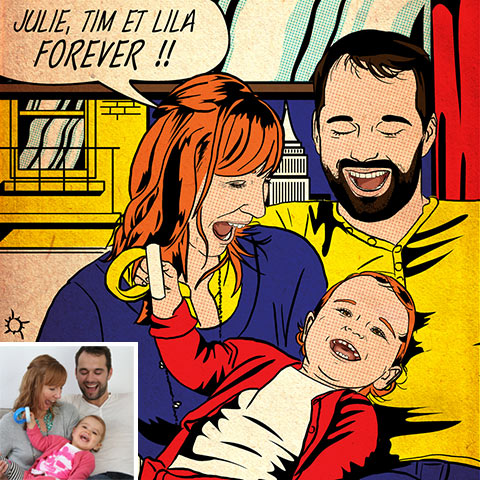
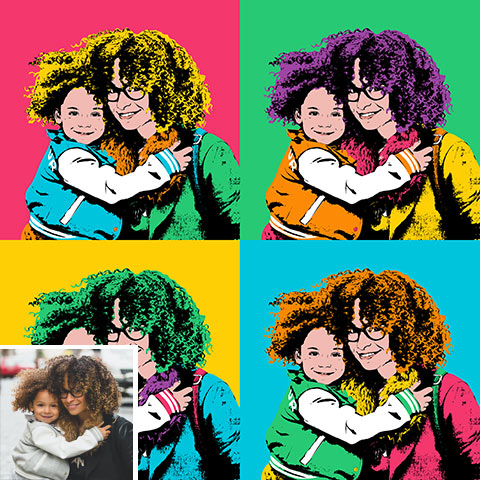
    Family photo in a Lichtenstein style for a colorful and original decoration
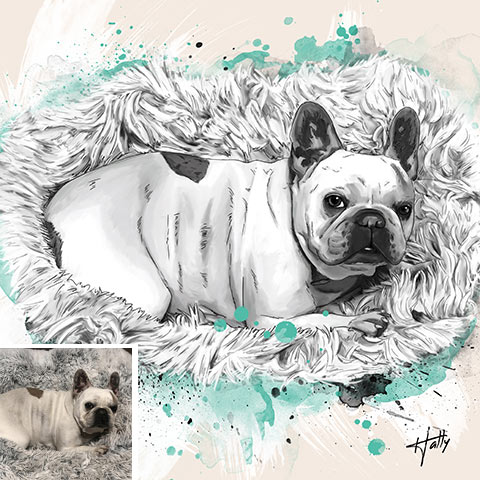
    Dog portrait in a drawing style, an artistic decorative piece
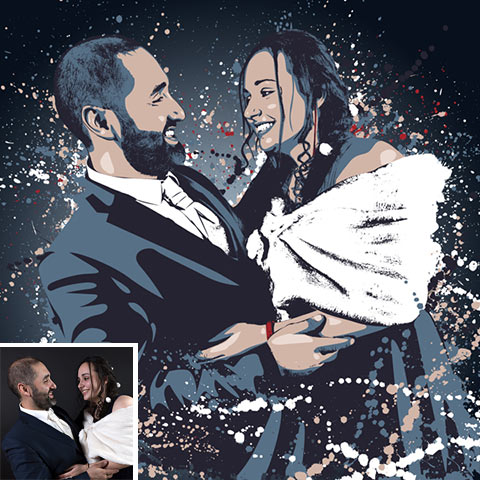
    Custom "splash" style painting based on a photo of a couple

    Customise the style, colours and dimensions of the artwork

    A photo can be personalised in many ways. At Votreportrait.fr, you can choose from a wide range of artistic styles : Pop Art, Line Art, comic book, painting effect and more. You can also adjust the colours of the image to match your interior decor, as well as tailor the size of the artwork to suit the available space. As a result, a single photo can give rise to several different interpretations :

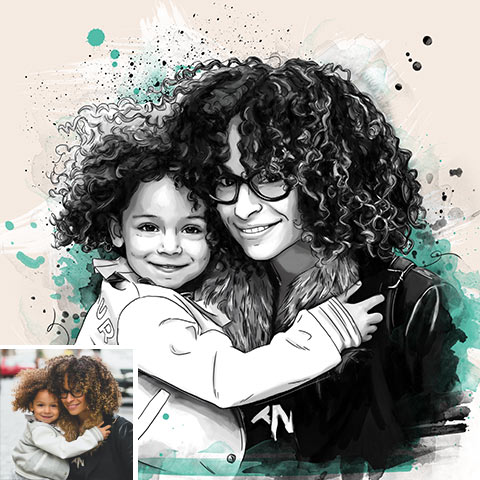
    Custom photo-to-sketch conversion for an artistic decorative piece
    Sketch style
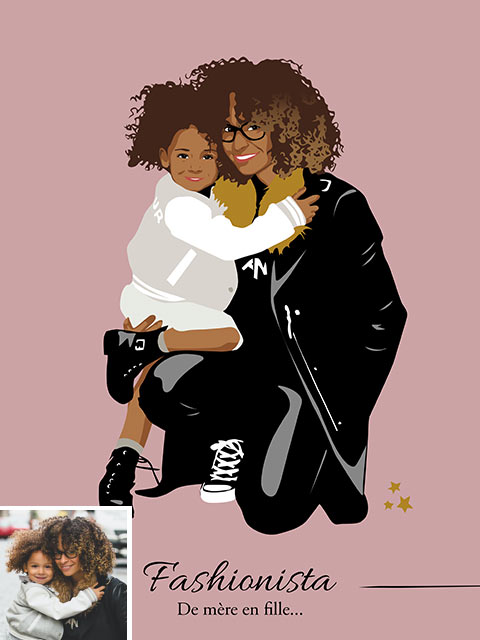
    Minimalist-style family photo for trendy wall decor
    Minimalist style
    Pop Art decorative piece created from a personal photo
    Pop Art style

    Choose between a canvas print and a framed photo print

    A canvas print stretched over a frame offers an authentic finish, similar to that of a traditional work of art. The texture of the canvas adds depth to the image, whilst its wooden frame gives it a lovely sense of solidity.

    A print on photo paper, on the other hand, appeals with its contemporary aesthetic and great versatility. It allows you to choose your frame freely, change it as you wish, and thus easily refresh the atmosphere of your decor.

    Key steps to follow when choosing the right decorative artwork

    Modern, Scandinavian, industrial, bohemian or classic : take your cue from the existing ambience.

    Pick up on certain shades from your furniture or introduce a new colour to create contrast.

    Check the proportions between the decorative elements and test the size using a paper template.

    Consider the height, viewing distance and overall balance.

    A graphic illustration, a bespoke painted portrait or a photograph will not have the same effect.

    If you’d like to incorporate a personal photo into your interior, a bespoke portrait is a lovely way to create an original piece of decor that reflects your personality. Feel free to browse the different styles of artistic portraits from photos that we offer on Votreportrait.fr.

    Share this content